
Our Team

Libby Reinish
Co-Founder & Attorney
Libby Reinish is a civil rights attorney whose practice focuses on fair housing, employment discrimination, and appellate advocacy. She co-founded Rights & Remedies to make high-quality civil rights representation more accessible — because the strength of your lawyer shouldn't depend on how much money you have.
Before founding the firm, Libby served as a Human Rights Attorney at the Connecticut Commission on Human Rights and Opportunities (CHRO), where she managed an active docket of discrimination cases spanning administrative hearings, trial court, and appellate litigation. She also held a special assignment representing the CHRO in Freedom of Information Act matters — experience that directly informs the firm's FOIA practice. She previously worked as a Staff Attorney at the Massachusetts Fair Housing Center, where she represented victims of housing discrimination in administrative and federal forums and authored a successful $3 million HUD grant for fair housing enforcement.
Libby clerked for Justice Gregory T. D'Auria of the Connecticut Supreme Court immediately after law school, drafting judicial opinions and conducting in-depth legal research on novel and complex matters. That experience shaped how she thinks about appellate advocacy — what makes an argument persuasive to a court, and how legal doctrine actually develops. She brings that perspective to every brief she drafts.
Libby graduated from UConn School of Law with High Honors and served as an executive editor of the Connecticut Law Review. She received awards for excellence in several classes, including: Constitutional Law, Legal Research and Writing, Unfair and Deceptive Trade Practices, and Administrative Law. She also participated in the Connecticut Urban Legal Initiative law clinic, which serves small businesses, community development organizations and other nonprofit agencies, creative talents such as authors and artists, student and professional athletes, and others. She also holds a Master of Food and Agriculture Law and Policy from Vermont Law School, earned With Distinction.
Before law school, Libby spent nearly a decade in digital rights and media policy advocacy. As Campaigns Manager at the Free Software Foundation, she led national digital rights campaigns and expanded the organization's reach significantly. At Free Press, she advanced media diversity initiatives and organized congressional engagement on media ownership policy. At the Prometheus Radio Project, she led a national campaign that resulted in more than 100 FCC applications for community radio stations. This background — building coalitions, working with communities facing entrenched opposition, thinking strategically about systems change — shapes how she approaches civil rights law today.
Libby is committed to cases where the law can make a real difference in someone's life: a tenant with a disability fighting for a reasonable accommodation, a worker pushed out of a job because of who they are, a family denied housing because of where their income comes from. She handles cases at the trial level, before the CHRO and EEOC, and on appeal. She is licensed in Connecticut and Massachusetts and currently concentrates her practice in Connecticut.
Education
University of Connecticut School of Law, J.D., High Honors
Vermont Law School, M.F.A.L.P. (Master of Food and Agriculture Law and Policy), With Distinction
Hampshire College, B.A., American Studies / Media Studies
Licensed to Practice
State of Connecticut
State of Massachusetts
U.S. District Court for the District of Connecticut
U.S. District Court for the District of Massachusetts
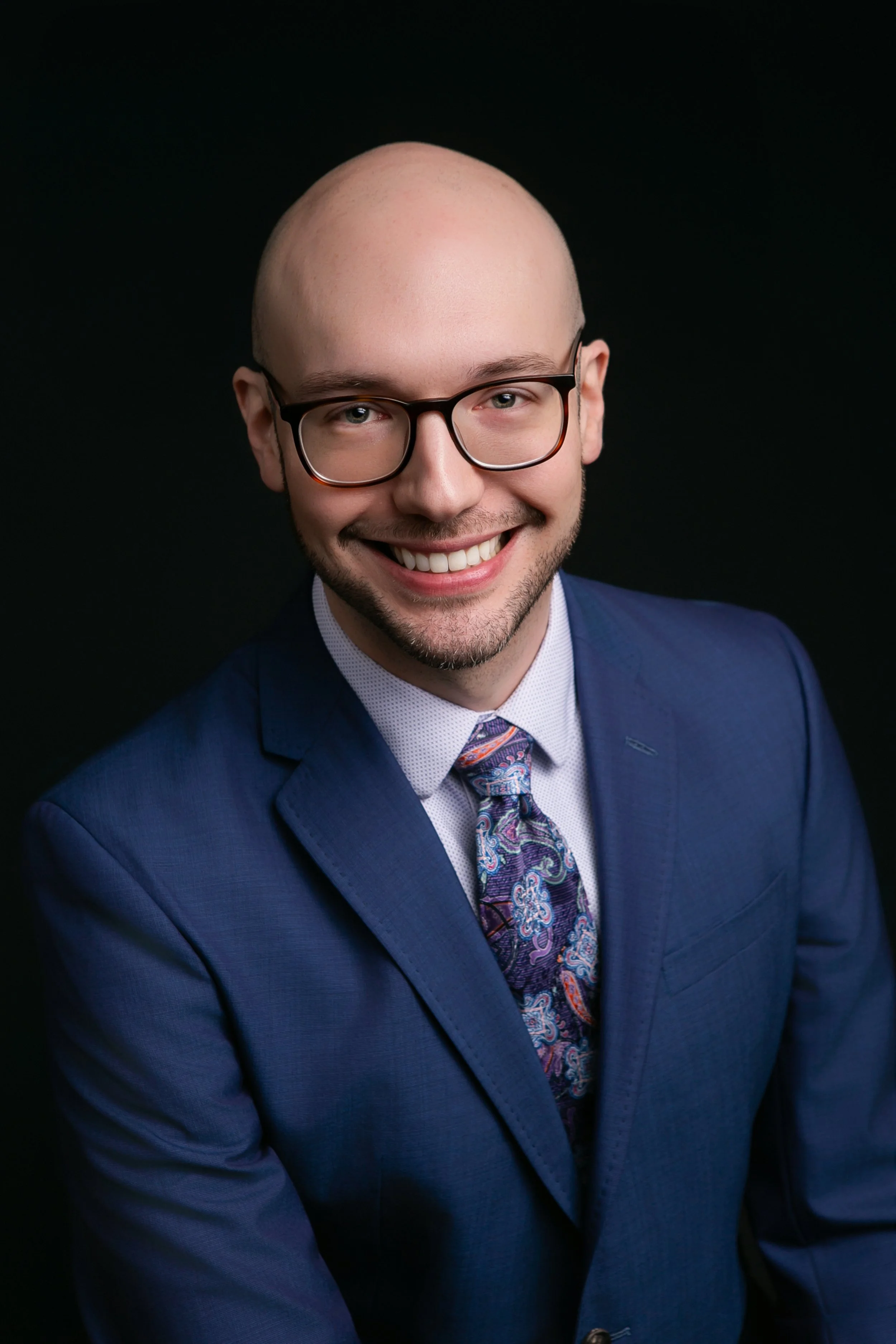
Michael Roberts
Co-Founder & Attorney
Michael Roberts is a civil rights attorney with more than a decade of frontline experience litigating employment and housing discrimination cases. He co-founded Rights & Remedies because he believes that people who have been wronged deserve tenacious, knowledgeable advocates — not just a process to endure.
Michael spent nearly eleven years at the Connecticut Commission on Human Rights and Opportunities (CHRO), one of the nation's oldest civil rights enforcement agencies, starting as a trainee and rising to become one of the agency's lead appellate litigators. There, he represented the CHRO in a high-volume docket of discrimination cases with a particular focus on appellate litigation and administrative law. He mediated and investigated complaints, argued before the Connecticut Supreme Court and Appellate Court, spearheaded amicus and intervention efforts to shape state-level precedent, and advised the agency on Freedom of Information Act compliance. He knows Connecticut's civil rights enforcement system from the inside — how complaints are investigated, where cases stall, and how to move them forward.
His appellate work at the CHRO produced a body of published decisions that have meaningfully expanded civil rights protections in Connecticut. Representative cases include:
Trinity Christian School v. CHRO, 329 Conn. 684 (2018) — religious entities are not automatically shielded from civil rights oversight in pregnancy discrimination cases
CHRO v. Edge Fitness, LLC, 342 Conn. 25 (2022) — exceptions to civil rights statutes must be created by the legislature, not the courts
Judicial Branch v. Gilbert, 343 Conn. 90 (2022); Bd. of Ed. of New Haven v. CHRO, 344 Conn. 603 (2022) — deprivations of federal civil rights in employment and education can form the basis for claims under Connecticut anti-discrimination law
Bd. of Ed. of Waterbury v. CHRO, 212 Conn. App. 578 (2022) — CHRO hearing officers have an affirmative duty to remedy discrimination, and uncertainties about back pay are resolved in favor of the employee
Oral Care Dental Group II, LLC v. Pallet, 213 Conn. App. 389 (2022) — a plaintiff in a sexual harassment case need not disclose medical records to support a claim for emotional distress damages
CHRO v. Cantillon, 347 Conn. 58 (2023) — being denied the enjoyment of one's home due to race-based harassment by a neighbor causes emotional and psychological harm, not just financial loss
Most recently, Michael served as Legal Director at a national civil rights nonprofit, where he oversaw employment discrimination case selection, developed legal strategy, built a network of partner organizations and firms, and drafted testimony in support of civil rights legislation. That national perspective informs how he thinks about civil rights law — not just as a series of individual cases, but as a body of doctrine with real consequences for how people live and work.
Michael is fluent in Spanish and is available to assist Spanish-speaking clients throughout their matter. He is a member of the Connecticut and New York bars and is admitted to practice before the U.S. Court of Appeals for the Second Circuit. At Rights & Remedies, he handles employment discrimination, housing discrimination, and public accommodations matters, with particular depth in CHRO proceedings, administrative appeals, and appellate litigation.
Education
University of Connecticut School of Law, J.D. — Editor-in-Chief, Connecticut Journal of International Law; Excellence Award for Trial Advocacy
University of Connecticut, B.A., Spanish, cum laude
Licensed to Practice
State of Connecticut
State of New York
U.S. District Court for the District of Connecticut
U.S. Court of Appeals for the Second Circuit